Big Brand? No Thanks. Why Americans Are Falling Hard for Small Makers They've Never Heard Of
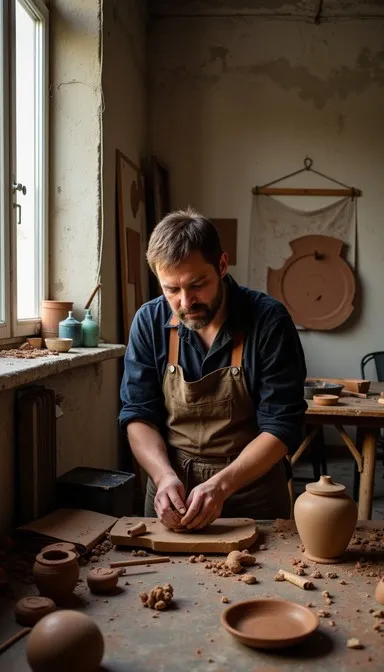
Photo: small independent maker craftsperson working in artisan workshop with handmade products, via images.stockcake.com
Walk into any Target or scroll through Amazon long enough and a strange feeling sets in. Everything starts to look the same. The same sans-serif fonts, the same "elevated basics" language, the same products that feel designed by committee to offend no one and excite no one.
A growing number of American consumers have decided they're done with that feeling — and they're voting with their wallets in ways that are reshaping entire product categories.
Welcome to the micro-brand moment.
What Exactly Is a Micro-Brand?
Let's be specific, because "small business" is too broad and "artisan" has been co-opted by too many corporate marketing decks. A micro-brand is typically a solo founder or tiny team building a product for a specific, often obsessive audience — and doing it with a level of specialization and transparency that larger companies structurally can't match.
We're talking about the guy in Boise who makes leather goods specifically for people who carry fountain pens. The woman in Austin who formulates skincare products exclusively for people with hyperpigmentation and humid climates. The duo in Detroit pressing limited vinyl runs of regional soul music that never got a proper reissue.
These aren't hobbyists dabbling in commerce. They're experts building businesses around depth of knowledge that no mainstream brand would ever bother to develop.
The Psychology of Choosing Small
So what's driving consumers toward these overlooked makers? It's not just contrarianism, though that's part of it.
Research into consumer psychology consistently shows that people derive more satisfaction from purchases when they feel a sense of narrative connection — when they know the story behind what they bought. A $60 wallet from a micro-brand whose maker explains every stitching decision in a YouTube video hits differently than a $60 wallet from a brand whose "About" page reads like a legal disclaimer.
"There's a concept called 'identity-expressive consumption,'" explains one behavioral economist who studies niche retail patterns. "When people buy from a micro-brand, they're not just buying a product. They're signaling something about their values, their taste, their willingness to do the research. It's a form of self-expression that a mass-market purchase simply can't provide."
For collectors especially, this dynamic is supercharged. The provenance of an object — who made it, why, under what conditions — is often inseparable from its perceived value. A hand-thrown mug from a ceramicist whose work you've followed for three years carries weight that a mass-produced version never could, even if they look identical on a shelf.
Case Studies in Micro-Brand Loyalty
The Pen Pocket Project started as a Kickstarter for a single leather sleeve designed to protect vintage fountain pens during travel. Its founder, a former graphic designer in Portland, had exactly one product and roughly 400 backers. Three years later, she has a waitlist for custom orders, a devoted following on Instagram, and a wholesale relationship with two independent stationery shops. She's never run a paid ad.
Coastal Grind Coffee launched out of a garage in Wilmington, North Carolina, roasting single-origin beans sourced specifically from coastal growing regions — a micro-niche within a micro-niche. Their customer retention rate is reportedly north of 70%, in a category where most subscription services struggle to hold 40%. The reason, according to founder interviews: customers feel like they're part of an ongoing conversation about where the coffee comes from, not just a recurring charge on their credit card.
Iron Age Pigments makes oil paints for fine artists using historically accurate mineral formulations — the kind of niche that sounds impossibly narrow until you realize how many serious painters have been waiting for exactly this. Their community on Discord now numbers several thousand, and they've turned their obsessive customer base into a product development resource, crowdsourcing feedback on new pigment lines before they launch.
None of these brands would have been findable five years ago without significant effort. Today, platforms built around niche discovery — NicheHaven included — are becoming the connective tissue between makers like these and the audiences who would love them if they could just find them.
Why Traditional Marketing Can't Replicate This
Here's the uncomfortable truth for big brands watching this happen: the loyalty micro-brands generate isn't really about the product. It's about the relationship. And relationships don't scale the way ad spend does.
You can't manufacture the feeling of emailing a founder directly and getting a thoughtful reply. You can't fake the authenticity of a maker who shares their failures publicly alongside their wins. You can't buy the trust that comes from a brand that's so specialized, its very existence proves the founder cares more about the craft than the market size.
Big brands have tried. The results — think every major corporation's attempt at a "small batch" sub-brand — tend to feel exactly like what they are: a large company cosplaying as a small one. Consumers, especially younger ones, have a finely tuned radar for this.
The Discovery Problem (and Who's Solving It)
The biggest challenge for micro-brands isn't quality or demand — it's visibility. The internet is vast, and algorithmic platforms tend to amplify what's already popular, which is definitionally not what micro-brands are.
This is where curated discovery platforms are filling a genuine gap. Rather than surfacing products based on sales volume or ad spend, niche-focused marketplaces and editorial platforms are using community knowledge, editorial judgment, and interest-graph matching to connect the right products with the right people.
For micro-brand founders, being featured on the right platform can be transformative — not because it drives millions of impressions, but because it drives the right impressions. A hundred deeply interested buyers are worth more to a small maker than ten thousand casual scrollers.
Small Is the New Loud
The micro-brand movement isn't a backlash against capitalism — it's a recalibration of it. Consumers are getting better at identifying what they actually want, and what they want increasingly includes knowing who made their stuff and why.
For makers willing to go deep on a specific passion, the audience is out there. Passionate, loyal, and tired of settling for whatever the algorithm decided was popular this week.
Small, it turns out, is a feature. Not a bug.