Hidden on Purpose: Why the Communities You Can't Google Are the Ones Worth Joining
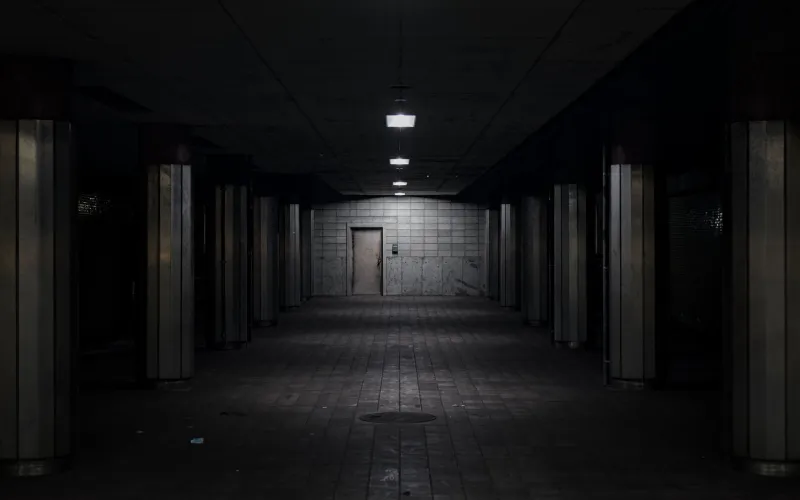
There's a particular kind of online community that you'll never stumble across by accident. You won't find it trending on Twitter. It won't pop up in your Instagram Explore feed. If you type the right keywords into Google, you might land on a years-old Reddit thread that hints at its existence — but the actual front door? That's somewhere else entirely, and nobody's handing out directions.
These communities aren't small because they failed to grow. They're small because they chose not to.
And weirdly enough, that choice is exactly what makes them so good.
The Algorithm Is Not Your Friend (Sometimes)
Most platforms are designed around a single assumption: visibility equals success. More followers, more reach, more engagement. The whole machine is built to push content outward, to maximize discovery, to get your stuff in front of as many eyeballs as possible.
But a growing number of niche communities are operating on the exact opposite logic. They're actively opting out of discoverability — no SEO-friendly titles, no public-facing social accounts, no press coverage sought or welcomed. Some Discord servers don't even show up in Discord's own search directory. Private Facebook groups set to "hidden" don't appear in search results at all. Certain forums run on platforms most people have never heard of, hosted on domains that look like random strings of letters.
The result? A community that only exists for people who already know it exists.
"If you have to ask how to find us, you're probably not ready yet," one moderator of a closed hobbyist group told a member who later shared the story on a public subreddit. The comment sounds almost snobbish out of context — but inside the community, it made complete sense. The group had been burned before by rapid influxes of new members who didn't understand the culture, didn't respect the norms, and ultimately diluted the thing that made the space special.
What You Protect When You Stay Invisible
There's a real cost to being found too fast. Anyone who's watched a beloved local restaurant get Yelp-famous overnight understands the feeling. Suddenly the vibe shifts. The regulars stop coming. The thing you loved about the place — the intimacy, the consistency, the sense that it was yours — evaporates.
Online communities work the same way, maybe even faster.
When a tight Discord server focused on, say, obscure 1970s Italian horror cinema gets a shoutout from a mid-size YouTube channel, the membership can triple in a week. Most of those new arrivals are curious but not committed. They ask basic questions that the community answered years ago. They post off-topic content. They bring outside drama. The longtime members, the ones who built the culture from scratch, start going quiet. Some leave entirely.
The community didn't die from neglect. It died from attention.
Groups that stay deliberately hidden avoid this cycle. They grow slowly, through word of mouth — a friend telling a friend, a DM sent to someone who posted something insightful in a tangentially related space. Every new member arrives with at least one personal connection to someone already inside. That social accountability matters. It creates a floor of shared values before anyone even types their first message.
The Tension That Makes It Complicated
Here's where it gets genuinely interesting, though: complete invisibility has its own problems.
Closed communities can calcify. Without fresh perspectives, groupthink sets in. The same ten people agreeing with each other for five years doesn't produce great conversation — it produces an echo chamber with good vibes. Some of the most intellectually alive niche spaces are the ones that figured out how to let some new people in, carefully, without blowing the whole thing open.
A few communities have developed what you might call a soft airlock system. There's a public-facing presence — maybe a newsletter, a minimal website, a lightly maintained social account — that acts as a filter. It's visible enough that the right kind of person can find it, but low-key enough that it doesn't attract mass attention. Interested newcomers go through an application or an introduction process. The community gets to evaluate fit before granting full access.
It's essentially a velvet rope, but one that's based on genuine enthusiasm rather than clout or follower count.
The Accidental Discovery Problem
Even the most carefully hidden communities get found eventually. A member posts something publicly that goes viral. A journalist writes a piece about the subculture. A popular podcast host mentions the group by name.
What happens next is almost always the same: a flood of new arrivals, a period of chaos, and then one of two outcomes. Either the community adapts — closes ranks, tightens admission, maybe splinters into a smaller inner circle — or it doesn't, and slowly becomes a shadow of what it was.
The communities that survive accidental discovery tend to have one thing in common: they'd already thought about this scenario before it happened. They had a plan, or at least a shared understanding of what they were willing to sacrifice and what they weren't. The ones that got blindsided rarely recovered cleanly.
There's also a third outcome that doesn't get talked about as much: some communities embrace the moment and ride it intentionally, converting the attention into something sustainable. But that requires a fundamental shift in identity — from hidden gem to public institution — and not every group is willing to make that trade.
Why This Matters for Anyone Who Loves Niche Stuff
If you're the kind of person who gravitates toward niche products, underground scenes, and communities built around genuine passion rather than mass appeal — and if you're reading NicheHaven, you probably are — then understanding this dynamic matters.
The communities worth seeking out aren't the ones with the biggest subreddits or the most-followed Instagram accounts. They're the ones that made you work a little to find them. The ones where your first week felt like showing up to a party where everyone already knows each other, and you had to earn your place at the table.
That friction isn't a bug. It's a feature. It's what separates a real community from an audience.
And maybe the most counterintuitive truth in all of niche culture is this: the harder something is to find, the more it tends to be worth finding. Not always. But often enough that it's worth putting in the effort — and worth protecting once you're inside.
Some doors don't have signs. That's the whole point.