Blown Up Overnight: What Happens When TikTok Finds Your Favorite Underground Community
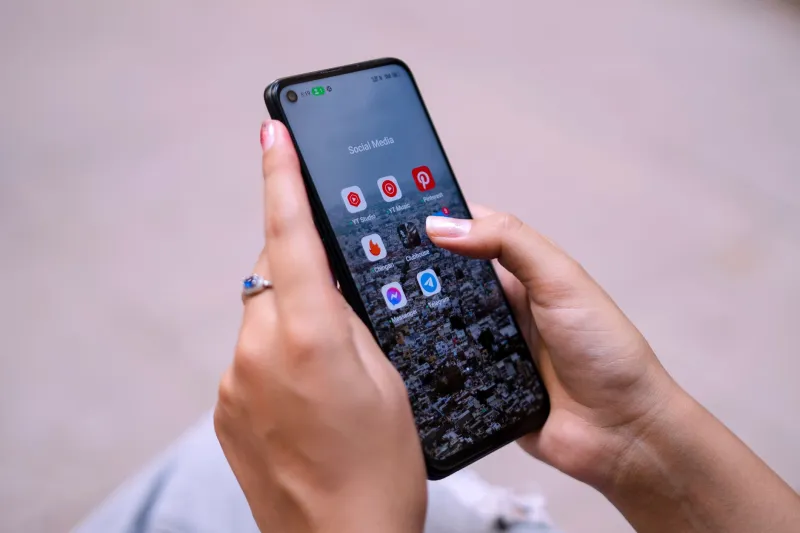
Imagine you've spent years building something small and special. A Discord server, a subreddit, maybe a Facebook group that somehow never got weird — a place where the regulars know each other's usernames, share inside jokes, and actually get the thing you all love. Then one Tuesday morning, someone posts a 47-second TikTok about your hobby, and by Thursday you're explaining basic concepts to ten thousand new members who found you through the For You page.
Welcome to the niche community paradox. The very thing that makes underground spaces magnetic — their specificity, their intimacy, their unspoken codes — is exactly what makes them catnip for viral content. And once the algorithm decides your scene is interesting, there's not a whole lot you can do about it.
The Moment Everything Changes
For Jordan Kelsey, a moderator for an online community centered around vintage synthesizer repair, the tipping point came without warning. A member posted a short clip of a restored 1970s ARP Odyssey making sounds that, honestly, did go kind of hard. The video got picked up by a music production account with 2.3 million followers, and within 72 hours, their quiet corner of the internet had tripled in size.
"The first wave was fine," Jordan told us. "Curious people, some of them genuinely interested. But by the second week we were getting questions like 'where do I buy one of these' and 'can someone just fix mine for me for free.' The whole vibe shifted."
That shift is something community managers across wildly different niches describe in almost identical terms. There's a before and an after. The before feels irreplaceable. The after requires a decision: adapt or watch the thing you built slowly hollow out.
Authenticity Under Pressure
Here's the uncomfortable truth about niche communities going viral: the newcomers aren't villains. Most of them are genuinely curious. The problem is scale. When a space built for 200 deeply invested people suddenly absorbs 20,000 casually interested ones, the ratio of context to noise collapses fast.
Maria Chen runs a tight-knit collector community focused on pre-2000s Japanese candy tin toys — the kind of hyper-specific hobby that usually lives happily in its own lane. After a popular thrifting account featured her group in a "hidden gem communities" roundup, membership jumped from around 400 to nearly 6,000 in three weeks.
"The hardest part wasn't the trolls or the people trying to flip stuff," she said. "It was just... the energy changed. The conversations got shallower. People who'd been there for years started going quiet because they didn't recognize the place anymore."
She responded by creating a tiered system — a public-facing introductory space and a separate, application-only channel for longtime members. It's a solution more and more community builders are landing on, essentially building a lobby in front of the living room.
The Communities That Actually Made It Work
Not every viral moment ends in disaster. Some communities have navigated explosive growth and come out the other side with their identity sharper than before. The key, according to the people who managed it well, usually comes down to one thing: intentional infrastructure built before the flood arrives.
Take the cottagecore aesthetic community that exploded on TikTok during 2020 and never really went back underground. What could have become a trend-chasing mess stabilized into something genuinely sustainable, largely because the original stewards had already written detailed community guidelines, developed clear aesthetic standards, and — maybe most importantly — had cultivated a core group of members who modeled the culture loudly and consistently for newcomers.
"New people don't know your history," said one long-running moderator from that space who asked to stay anonymous. "They're not trying to wreck anything. They just need to be shown what the place is about. If your culture is strong enough, it's actually contagious."
That framing — culture as contagious rather than fragile — is a useful reframe for communities navigating unwanted attention. Instead of treating growth like a threat, some spaces have leaned into onboarding as an act of curation.
When Going Viral Becomes a Business Problem
For communities attached to actual marketplaces — think niche collectibles, handmade goods, or specialty gear — a viral moment creates a whole other layer of complexity. Demand spikes. Prices shift. The small makers who were beloved by 500 people suddenly can't keep up with orders from 50,000.
This is where the NicheHaven ethos gets tested in real time. The whole appeal of niche commerce is its human scale: you know where the thing came from, who made it, why it matters. Viral exposure can strip that context away almost instantly, turning a beloved artisan into just another Etsy shop drowning in notifications.
Some sellers have handled this by deliberately limiting production, maintaining waitlists, and being transparent with their audience about why they're not scaling up. Others have struggled with the pressure to chase the moment. The ones who seem happiest, almost universally, are the ones who decided early that they weren't trying to be a big brand — and held that line even when the algorithm offered them a shortcut.
What This Means for the Rest of Us
If you're part of a niche community right now, there's a decent chance you've already thought about this. Maybe your space has already been through it. Maybe you're quietly dreading the day some influencer stumbles onto your thing and decides to make it their personality for a week.
The honest answer is that you can't fully prevent it. The internet doesn't really do private anymore, and anything genuinely interesting is eventually going to get found. What you can control is what you've built before the wave hits — the documentation, the culture, the core relationships, the sense of shared purpose that makes a community more than just a headcount.
The niche spaces that survive viral moments aren't the ones that kept the most people out. They're the ones that were clear enough about who they were that the right people wanted to stay.
And sometimes, buried in that flood of new members, there are a few hundred people who genuinely belong there — who just needed a TikTok to point them in the right direction. That's not nothing. That's actually kind of the whole point.