Why Your Favorite Niche Product Costs Twice as Much (And Why That's Actually Fair)

Let's be honest. At some point, you've hovered over the checkout button on something from a small maker, clocked the price, and thought: is this thing made of gold? A $55 bar of artisan soap. A $120 limited-run enamel pin set. A $45 bottle of small-batch hot sauce that comes in a run of 300 units.
Here's the thing nobody tells you: that price isn't random. It's not ego, and it's not a cash grab. It's the direct result of a brutal economic reality that small producers deal with every single day — one that mass-market brands solved decades ago by doing something niche makers simply can't: sell to everybody.
Welcome to what we're calling the Niche Tax. It's real, it's unavoidable, and understanding it might just change how you think about every specialized product you buy.
The Tyranny of Minimum Order Quantities
Here's where it starts. Most manufacturers — whether they're making packaging, fabric, ceramics, or custom hardware — operate on something called a minimum order quantity, or MOQ. This is the smallest number of units they'll produce in a single run. And those minimums exist because tooling up a production line costs money regardless of how many units come out the other end.
For a company like Procter & Gamble, ordering 500,000 units of something is Tuesday. For a small maker producing a specialty item for a community of a few thousand people? They might only need 500 units total. But the factory still wants them to order 2,000.
So what happens? The maker either eats the cost of unsold inventory, or they spread that manufacturing overhead across fewer units — which means each individual product has to carry more of the financial weight. You're not just paying for the item in your hand. You're subsidizing the other 1,500 units sitting in someone's garage in Portland.
Shipping Math That Doesn't Work in Anyone's Favor
Mass-market brands move freight by the pallet, the container, the semi-truck. When you're shipping at that scale, your per-unit logistics cost drops to almost nothing. A company moving a million widgets across the country pays pennies per widget to do it.
Niche brands don't live in that world. They're often shipping in smaller batches from regional suppliers, sometimes sourcing specialty materials that don't exist in bulk domestic supply chains. That ceramic glaze from a specific vendor in Ohio? It ships in 10-pound increments. That particular dye used in a limited-run textile? It comes from one supplier in the Southeast who doesn't negotiate on price because they don't have to.
Every link in a niche supply chain is a little more expensive than its mass-market equivalent — and those costs stack. By the time a product reaches your door, it's absorbed freight surcharges, small-batch material premiums, and possibly customs fees if any component came from overseas without the volume discount a big importer would command.
The Hidden Cost of a Scattered Customer Base
Here's one that rarely gets talked about: niche customers are geographically spread out in ways that make fulfillment genuinely inefficient.
When Target ships to customers, they're optimizing routes, batching orders by region, and running distribution centers that process thousands of packages per hour. A small maker selling to 800 devoted fans across 40 states is doing something fundamentally different. They might be hand-packing orders in a spare bedroom. They're paying retail shipping rates, not negotiated carrier contracts. And because their volume doesn't qualify them for the kind of carrier discounts that big e-commerce players get, they're paying more per package to get things to you than Amazon would pay to ship something three times as heavy.
Some of that cost gets absorbed. A lot of it gets passed along — not out of greed, but because there's nowhere else for it to go.
Time Is Expensive When You're Doing It By Hand
Automation is what makes mass production cheap. Machines don't take breaks, don't make mistakes at scale, and can produce thousands of identical units per hour at a fraction of the labor cost of human hands.
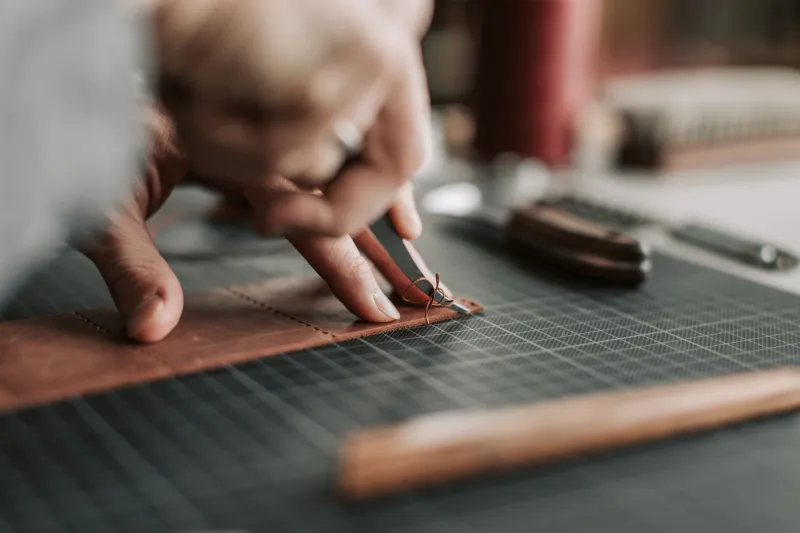
Niche production often involves the opposite: skilled human attention applied to small batches. Whether it's a ceramicist trimming each piece individually, a small food producer hand-labeling bottles, or an indie textile maker running limited dye lots, labor costs per unit are significantly higher when you can't automate the process.
And in the US, where labor isn't cheap, that matters. A domestic small-batch producer making 200 units of something over a weekend is paying themselves (or their staff) real wages to do it. That gets baked into the price. It has to.
Paying for Quality vs. Paying for Scarcity — How to Tell the Difference
Not every premium price tag is justified by economics alone, and it's worth being a smart consumer about this.
You're probably paying for genuine quality when:
- The materials are traceable and genuinely specialty-grade
- The production process is labor-intensive by nature, not by choice
- The maker is transparent about their costs and process
- The product performs or lasts noticeably better than mass-market alternatives
You might be paying for scarcity theater when:
- The "limited run" is artificially restricted to drive FOMO
- The premium materials are mostly a marketing story with little functional difference
- The price scales with hype rather than with any change in production complexity
- The brand leans harder on exclusivity than on craft
Both exist in niche markets. The difference matters — not because you should feel bad for enjoying a hype-driven limited drop, but because understanding why something costs what it costs helps you decide whether it's worth it to you.
So Is the Niche Tax Worth Paying?
For a lot of people, yes. And not just because of the product itself.
When you buy from a small maker operating in a niche space, you're often funding something that wouldn't exist otherwise. Mass production doesn't make things for communities of 3,000 people with very specific tastes. Nobody at a big consumer goods company is sitting around thinking about what the competitive trail running community in the Mountain West actually wants in a hydration vest, or what a serious home fermentation hobbyist needs in a specialty crock.
Niche makers fill those gaps. And they do it while absorbing economic inefficiencies that their larger competitors solved by abandoning specificity altogether.
The Niche Tax is real. But it's also the price of having something made for you — not for everyone, not for a demographic, but for the specific weird niche you happen to occupy. That's worth something. Probably more than you initially thought when you were staring at that checkout button.