Moq, Money, and a Discord Server: Inside America's Group Buy Gold Rush
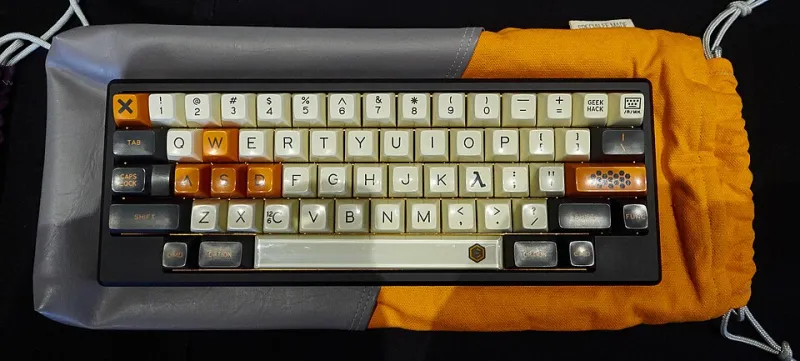
Photo: Patrick Breen, CC BY 2.0, via Wikimedia Commons
Somewhere in Ohio, a shipping pallet holding 400 anodized aluminum keycaps exists solely because 400 strangers on the internet each decided, independently, that they wanted the same thing nobody had made in six years.
Nobody at a keyboard forum is calling themselves a manufacturer. But functionally, that's exactly what happened. Someone sketched a part. Someone else said "if we hit 250 units, a factory in Dongguan will run it." A third person set up a Google Form. And like that, a product that died in 2019 blinked back to life — funded not by a venture round, but by $85 payments from people who've never met.
The Internet Learned to Negotiate With Factories
The group buy model isn't brand new. Mechanical keyboard hobbyists more or less perfected it over the last decade, treating minimum order quantities like raid bosses. You can't order 500 custom switches alone. You absolutely can order 500 of them with 499 friends.
What's changed is how far the model has spread. Vintage-style band tees with officially-licensed runs that never happened. Replica parts for discontinued EDC knives. Reissues of out-of-print board game components. The pattern is the same everywhere: a community notices a gap in the world, does the math, and fills it.
The coordination tools are unglamorous — Discord channels, Google Sheets, a Shopify page someone spun up in an afternoon. But the trust infrastructure underneath is remarkably sophisticated. Veteran group buy organizers carry reputations that function like credit scores. Run one clean buy and you can raise thousands on your word alone. Flub a timeline and the community remembers forever.
The Waiting Is the Product
Here's the part outsiders can't wrap their heads around: group buys routinely take 12 to 18 months to deliver. Sometimes longer. People pay upfront and then... wait. Cheerfully.
The wait has actually become part of the appeal. There's a whole ritual to it — mockup reveals, factory photo updates, the collective groan when a colorway gets delayed for the third time. It's less like shopping and more like backing a tiny, hyper-specific moonshot with 300 people who care about the exact same weird thing you do.
Which raises the obvious question: what happens when a "one-time" buy turns out not to be one-time?
The Sequel Problem
Every organizer dreads the round two conversation. Group buys work precisely because they're finite — a snapshot of demand, a closed chapter. But the moment a run sells out in 40 minutes, the DMs start. "Will there be more?" "I missed it, please."
Some organizers cave and run a second round, which almost always lands worse. The novelty's gone, the latecomers feel less like co-founders and more like customers, and the original buyers quietly resent that their "rare" piece just became a product line. Others hold the line on one-and-done, which preserves the magic but leaves real demand — and real money — on the table.
It's the same tension every indie brand eventually faces, compressed into a single spreadsheet. Scarcity built the thing. Scarcity also caps it.
Accidental Manufacturers, Real Stakes
The wild part is how little these fan-run operations resemble businesses. Many organizers take zero profit. Some eat losses when a factory botches a run. There's no LLC, no customer service department — just a person in Kansas with a Discord ping and a responsibility to 600 people.
And yet, they're outmaneuvering actual companies. They know demand down to the individual colorway. They have pre-committed capital before spending a dime on production. Every legacy brand that's ever guessed wrong on a product run should be taking notes.
The group buy revolution isn't really about keyboards or tees. It's proof that when a community wants something to exist badly enough, it doesn't need permission, investors, or even a company. It needs a form, a factory, and enough people who refuse to let a good product stay dead.