Climate Control and a $4,000 Cardboard Box: The Strange World of Off-Site Collecting
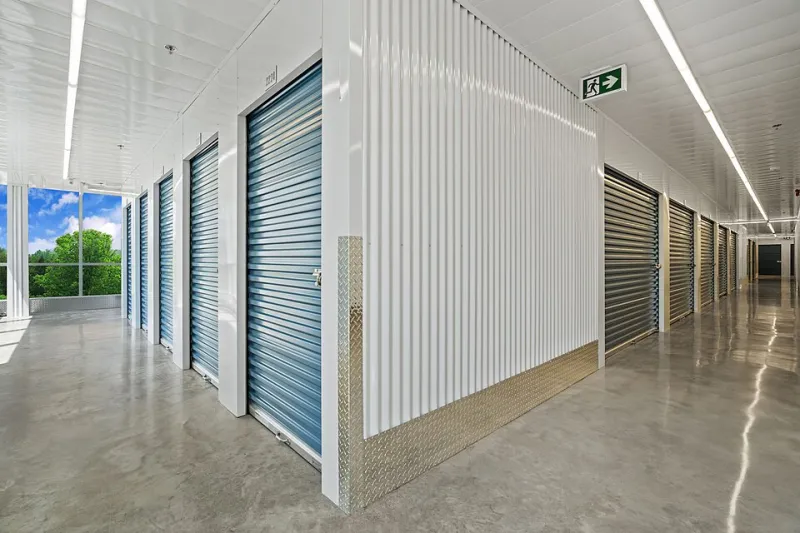
Photo: JMORGANSELFSTOR, CC BY-SA 4.0, via Wikimedia Commons
There's a moment in every serious collector's life when the collection outgrows the apartment. The shelves are full. The closet is a fire hazard. The significant other has used the word "intervention."
For a growing number of Americans, the answer isn't selling — it's renting a second home for the stuff. Storage facilities across the country report a quiet boom in collectors renting units not for furniture during a move, but for sneakers, vinyl, trading cards, and vintage electronics that may never be touched again.
The Unit as Vault
Walk through a climate-controlled facility in, say, suburban New Jersey or outside Austin, and you'll find units that don't look like storage at all. Metal shelving in tidy rows. Dehumidifiers humming. Sneaker boxes arranged like a library. Sealed graded trading cards in fireproof cases.
The collectors doing this aren't casual. They're people who treat acquisition as asset allocation — people who watched a 1986 Fleer Jordan card sell for $2.9 million and realized their childhood binder might be a 401(k).
The economics get interesting fast. A small climate-controlled unit runs $75–$150 a month depending on the market. Insure the contents properly — more on that in a second — and you're looking at a real monthly carry cost. At some point, the collection isn't a hobby with storage needs. It's a portfolio with a storage expense.
Owning Without Touching
Here's the psychological knot at the center of all this: collectors paying monthly rent to store items they rarely see, handle, or use. What exactly are they owning?
Ask them and you'll get answers ranging from the practical ("it's an investment, I'm preserving condition") to the almost spiritual ("knowing it's there is the point"). Psychologists have a name for part of this — the endowment effect, our tendency to value things more once we own them. But there's something else going on too: for many collectors, the collection is an identity archive. Selling it would feel like deleting a hard drive of the self.
The access-versus-ownership debate is real, though. Some former storage renters told us the turning point was realizing they'd become a warehouse manager for their own pastime. "I was paying $120 a month to not look at my records," one said. "I sold half, moved the rest into my living room, and I've never been happier."
Five Rules for Storing Without Destroying Value
If you're going to go the off-site route, do it right. Collectors and conservators we consulted agreed on the fundamentals:
-
Climate control is non-negotiable. Paper, vinyl, adhesive, and foam all degrade with humidity swings. You want stable temperature and relative humidity below ~55%. A standard drive-up unit in a humid climate will quietly wreck a card collection in two summers.
-
Elevate everything. Keep boxes off concrete floors — even in climate-controlled units, use shelving or pallets. Water damage is the insurance claim nobody plans for.
-
Insure it separately. Most storage facility policies and homeowner's riders do NOT cover collectibles at full value. You need a collectibles-specific policy, and that means documenting everything: photos, receipts, graded slabs, appraisals.
-
Keep an inventory outside the unit. A spreadsheet with photos, purchase prices, and locations. If the worst happens, you can't file a claim on what you can't prove you owned.
-
Visit. Seriously. Check quarterly for pests, moisture, and shifting boxes. The collectors who get burned are almost always the ones who set it and forgot it for two years.
The Bigger Picture
There's something very American about all of this — a self-storage industry with more square footage than anyone knows what to do with, meeting a collecting boom fueled by pandemic-era nostalgia and investment culture. The collector storage unit is where hoarding, investing, and sentimentality all sign the same lease.
Is it rational? Not entirely. But nobody ever got into collecting for the rationality. The question worth asking yourself before signing that lease: are you preserving a treasure, or just relocating a problem? Sometimes the answer is a vault. Sometimes it's a garage sale.
Though — as we covered recently — good luck finding one of those anymore.