They Disappeared Without Warning: How Devoted Fans Are Tracking Down Their Favorite Dead Indie Brands
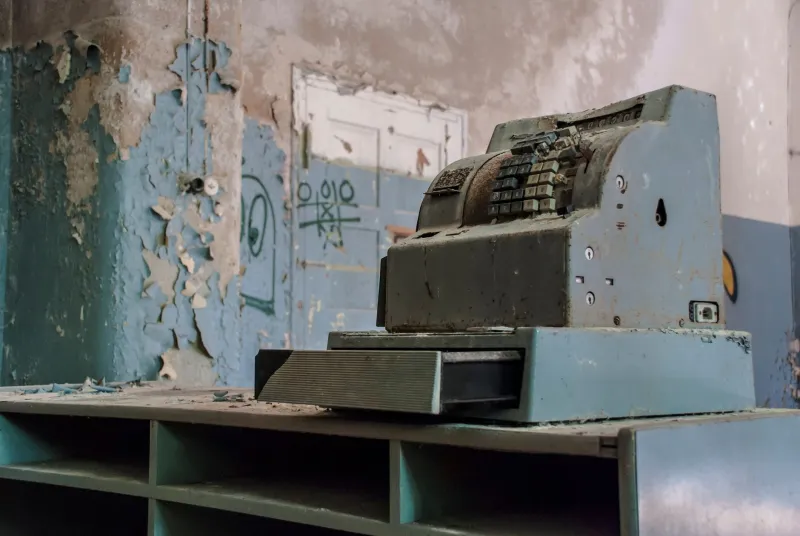
It starts the same way every time. You go to reorder that candle — the one with the weird name and the smell that made your whole apartment feel like a Pacific Northwest cabin — and the website just... doesn't load. The Instagram is still up, but the last post was eighteen months ago. The Etsy shop says "on vacation." The contact form bounces back.
Your favorite indie brand ghosted you. And honestly? You're not alone.
This is one of the stranger grief cycles of modern consumer life: the slow-motion disappearance of a small brand that felt like it was made specifically for you. No announcement, no farewell post, no closure. Just silence. But here's the thing — the fans don't just move on. A surprisingly dedicated slice of the niche product world turns into full-on detectives when something they love vanishes from the internet.
The Archaeology of a Dead Brand
The first stop for most fans is the Wayback Machine. The Internet Archive's snapshot tool has become an unlikely resource for people trying to reconstruct what a brand was, what it sold, and whether there's any trail worth following. Collectors in the hot sauce, artisan soap, small-batch spirits, and indie toy spaces have all developed their own version of this digital archaeology.
Reddit is usually the second move. Subreddits dedicated to niche categories — r/hotsauce, r/mechanicalkeyboards, r/Indiemakeup, r/vinyl — become informal missing persons boards. Someone posts "does anyone know what happened to [brand]?" and within hours, a thread blooms with theories, saved screenshots, and the occasional person who actually knew the founder.
From there, it gets more organized. Discord servers dedicated to specific niche communities have developed what amounts to brand obituary channels — places where members document discontinued products, track down remaining inventory on eBay or Mercari, and pool information about whether the creator is still reachable anywhere online.
"We basically built a whole reference library," says one moderator of a Discord server dedicated to small-batch candle makers. "If a brand goes quiet, we document everything we can find. Scent notes, old photos, ingredient lists. Some of us want to reverse-engineer the formulas. Some just want to remember."
The Market That Refuses to Quit
Here's the thing about niche products: the secondary market doesn't care that the brand is gone. In some cases, it gets more active.
Limited-run items from indie brands that have shuttered can command serious prices on resale platforms. A small-batch skincare line that quietly closed during the pandemic years still has active listings on Poshmark. An indie tabletop game company that folded after its Kickstarter campaign has expansion packs selling for triple their original price on BoardGameGeek's marketplace.
This secondary economy does something interesting — it keeps the brand's name circulating even when there's no one left to run the actual business. New people discover the product through resale listings, become curious, go looking, and end up in the same Discord server or Reddit thread as everyone else who fell in love with it.
It's a strange kind of immortality.
When Demand Writes the Comeback Story
Sometimes the detective work pays off in the most unexpected way: the creator comes back.
This happens more than you'd think. A founder who burned out, needed a break, or simply ran out of money to keep going will occasionally resurface — often because someone tracked them down and made it clear that people still care. The evidence of demand that fans have been quietly accumulating becomes a real business case.
In the indie food and beverage world, several small-batch producers have relaunched specifically because fans organized enough visible demand to make it feel worth trying again. One hot sauce maker who shuttered her operation in 2020 came back two years later after a Reddit thread about her flagship product went viral in the subreddit. She saw it. She responded. She relaunched on a smaller scale with pre-orders only.
"I had no idea anyone was still thinking about it," she said in her relaunch post. "Seeing that thread kind of broke me open."
The indie music world has a long history of this dynamic — bands reuniting because the audience never left — but it's increasingly happening in physical product spaces too. Small toy companies, artisan food brands, and niche apparel makers are all experiencing versions of this story.
The Homemade Alternative Economy
Not every lost brand comes back, though. And for the truly obsessed, waiting isn't really an option.
Some fan communities have moved from documentation to outright replication. In the mechanical keyboard hobby, for example, discontinued keycap sets have inspired community members to organize group buys that recreate the original colorways — sometimes with the blessing of the original designer, sometimes without. The indie perfume community has a long tradition of "cloning" discontinued scents through community-sourced formulas shared on forums.
This is where niche collecting starts to shade into something more like folk preservation. The fans aren't just keeping a market alive; they're actively doing the cultural work of keeping a thing in the world when its original steward can't or won't.
There are obvious legal gray areas here, and the ethics shift depending on whether the original creator is still around and whether they're okay with it. But the impulse itself is pretty human: if something mattered, it deserves to exist.
What It All Says About Niche Loyalty
The whole phenomenon points to something that mainstream brands spend millions trying to manufacture and mostly fail at: genuine, lasting loyalty that doesn't require the brand to do anything to maintain it.
When a mass-market product gets discontinued, there's usually a brief social media outcry and then everyone moves on to the next thing. When a beloved indie brand disappears, a subset of its fans just... keeps going. They build the infrastructure. They maintain the memory. They keep the flame lit in case someone wants to come back to it.
That's not consumer behavior. That's something closer to community, which is kind of the whole point of niche products in the first place.
So if your favorite small brand just vanished on you, don't give up too fast. Check Reddit. Find the Discord. Look for the thread. There's probably already a group of people who felt the same loss and decided to do something about it — and there's a decent chance the founder is lurking somewhere nearby, watching to see if anyone still cares.
Spoiler: they do.